Some of our strongest clients started in their 50s, 60s and beyond. Age isn't a barrier here — it's just a starting point, the same as any other.
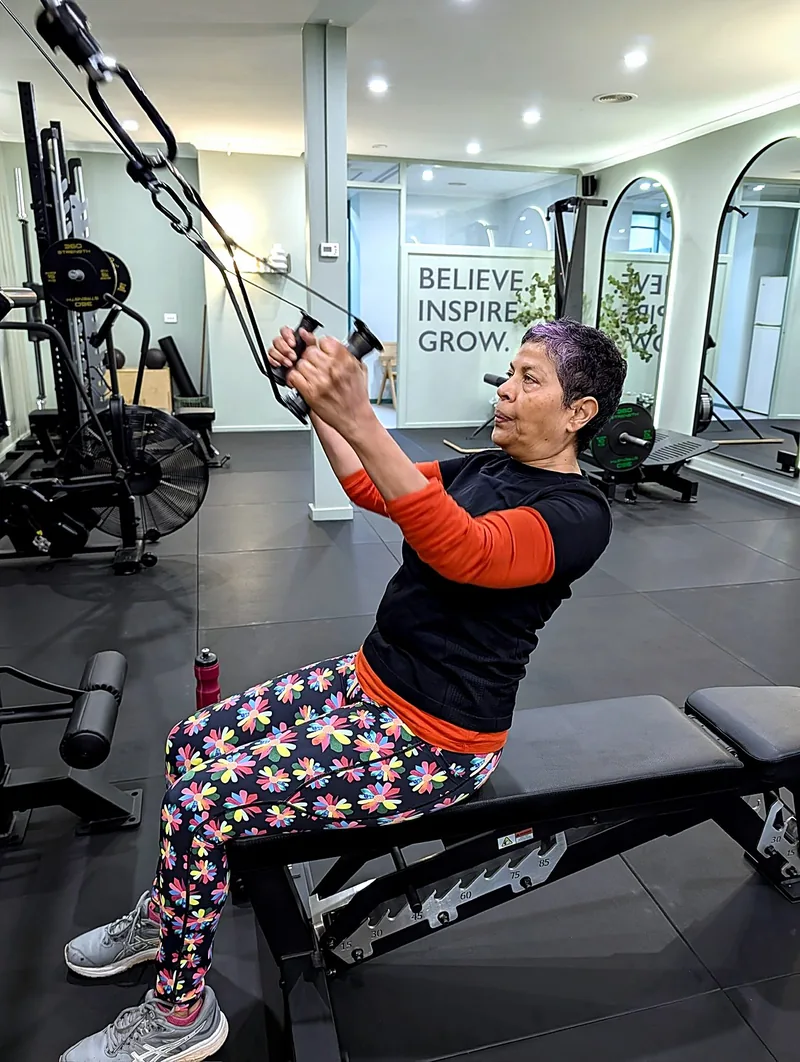
From your 30s onward the body naturally loses muscle mass and bone density each decade, and that decline speeds up if it's left unaddressed. Strength training is one of the most well-supported ways to slow it: research consistently links it to better preservation of muscle and bone, improved balance and functional independence, and lower risk of early mortality in older adults. (Mayo Clinic Proceedings; ScienceDaily, 2026.)
Every program starts with a detailed movement assessment, and is built to be safe, progressive and sustainable rather than generic. If you're managing back pain, an old injury, or changes that come with hormonal shifts, that's information the program is built around, not something to push through.
One coach, one client, one bay, by appointment. No crowd, no class to keep up with, no sense that everyone else knows what they're doing. For a lot of people that's the difference between starting and not starting.
It's the most common starting point we see. The assessment exists so the first program matches what your body can do now, and progresses from there.
Yes — that's what the movement assessment is for. Programs are built to be safe and progressive around what your body can do now. We're coaches, not clinicians, so if something needs medical input we'll say so.
Most people start with one 60-minute session a week or two shorter ones. We'll work out what's realistic for your week at the goal-setting session rather than guessing.
Two 45-minute training sessions and a 45-minute goal-setting session, so you finish the week knowing exactly what a program written for you would look like. Nothing to pay, and no obligation to continue.